Risk Management · 2025
In this section2 topics
Risk Management Policy & Plan
Policy & Plan Description
Risk Management
Geopolitical challenges continue to be a key driver of emerging risks across multiple dimensions. Based on the Global Risks Report published by the World Economic Forum (WEF), together with an external environment analysis under the PESTEL framework (Political, Economic, Social, Technological, Environmental, and Legal factors), consistent global risk trends have been identified.
Major economic policies such as “America First” and “Made in China” have influenced global regulations, policies, and business practices, including Environmental, Social, and Governance (ESG) considerations—particularly in addressing climate change. Under a worst-case scenario analysis, such policies could lead to increased social polarization, reduced international cooperation on climate action, shifts in global supply chains, and the need for relocation of production bases.
Furthermore, geopolitical and environmental risks, including climate change and biodiversity loss, continue to create uncertainties across various dimensions, such as natural disasters, emerging infectious diseases, and the risk of future pandemics. These factors highlight the need for businesses to adopt resilient strategies, strengthen supply chain robustness, and invest in sustainable innovation to mitigate long-term impacts.
Risk Management Policy and Framework
Delta Electronics (Thailand) Public Company Limited adopts internationally recognized risk management frameworks, including COSO Enterprise Risk Management, ISO 31000, and the Governance, Risk, and Compliance (GRC) framework, as strategic tools to manage uncertainties and support sustainable growth.
The Delta Group’s risk management policy (“the Policy”) is designed to enable effective identification, assessment, mitigation, and communication of risks. Its objective is to minimize the likelihood of risk occurrence and limit potential impacts within the Company’s defined risk appetite. A robust risk management framework supports the Group in achieving its strategic objectives while delivering sustainable value to stakeholders.
The Board of Directors is responsible for strategic oversight to ensure the effectiveness of the risk management framework. The Board has established the Risk and Sustainable Development Committee (RSDC) as an independent body to formulate policies and oversee risk management practices, with the aim of reducing both the likelihood and impact of potential risks.
The RSDC governance structure is aligned with the “Three Lines Model,” ensuring clear roles and responsibilities and supporting the achievement of risk management objectives. In addition, other Board committees including the Corporate Governance Committee, the Nomination and Remuneration Committee, and the Audit Committee play key roles in monitoring and supporting the RSDC on an ongoing basis.
At the Board of Directors’ meeting held on February 13, 2026, the Board approved the objectives and targets of the risk management framework, endorsed risk prioritization, reviewed risk response strategies, and considered key performance and risk indicators (KPI/KRI) relevant to the Company’s operations.
Three Lines Model
First Line: Management and Operational Units
Management and operational units are responsible for identifying, assessing, and managing risks in day-to-day operations. Roles, responsibilities, and performance indicators are clearly defined in the enterprise risk management policy.
Second Line: Risk Oversight and Management
The Chief Executive Officer (CEO), as Chair of the RSDC, provides strategic oversight together with senior management. The sustainability function serves as the secretariat, supporting implementation in line with the established framework, enhancing risk control mechanisms, monitoring risk factors, and ensuring transparent communication with stakeholders.
Third Line: Internal Audit
The internal audit function operates independently and reports directly to the Audit Committee. It is responsible for evaluating the adequacy of internal controls, ensuring compliance with policies, and providing recommendations to support the achievement of strategic objectives.
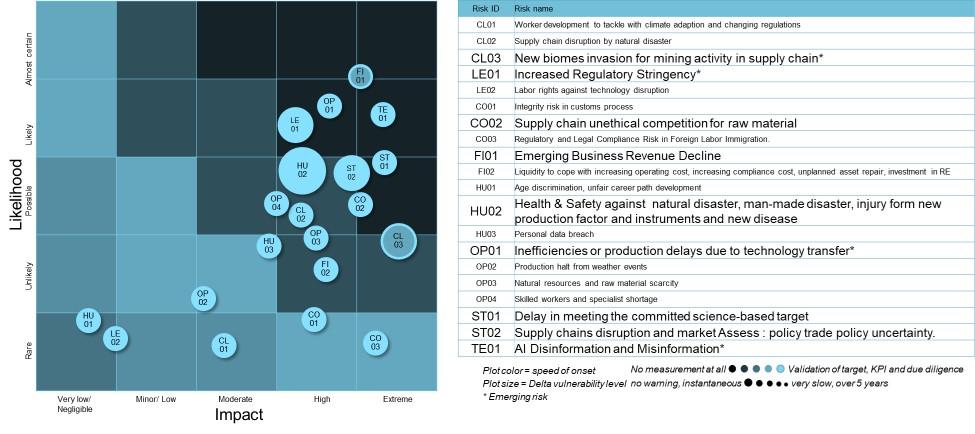
During the same meeting, the RSDC presented in-depth risk analyses, including worst-case scenarios, ESG risk matrices, and risk prioritization based on likelihood, financial impact, organizational readiness, and time horizon.
The assessment identified seven material ESG risks and one financial risk that are significant to stakeholders. The Board also reviewed changes in the Company’s risk profile, progress on risk mitigation plans, and Key Risk Indicators (KRIs), while providing guidance on monitoring emerging risks. In addition, the Board evaluated the effectiveness of budget utilization under the internal carbon pricing mechanism and acknowledged developments in laws and regulations related to products and solutions involving artificial intelligence (AI).
Policy Document Link
https://www.deltathailand.com/th/pdf/about/committee_charter/enterprise-risk-management-policy.pdf
Risks to the Company's Business Operations
Risk Register
| Risk Name | Risk Characteristics | Consequences | Management Measures | Related Risk Factors |
|---|---|---|---|---|
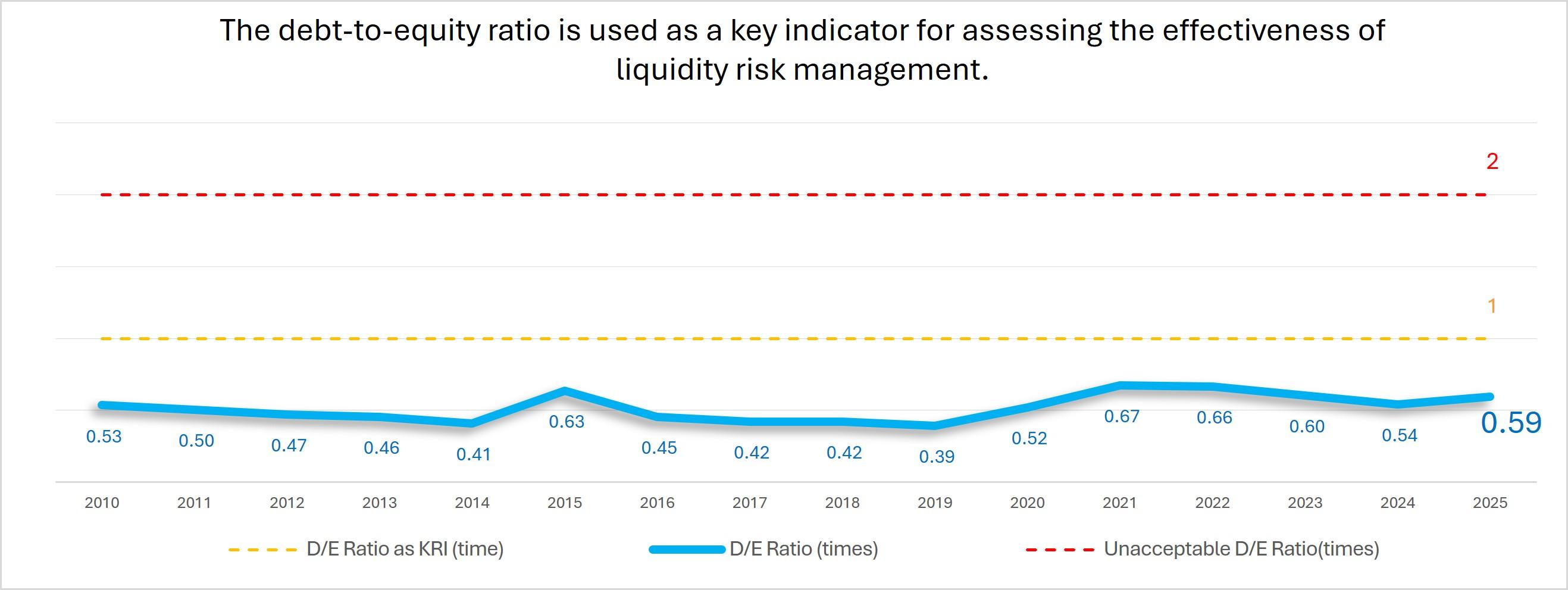
| Liquidity Risk | Through the Company’s sustainability materiality assessment and stakeholder engagement across multiple channels, it has identified stakeholder concerns that the Company may face liquidity risks arising from geopolitical and environmental factors. These include the impact of protectionist policies such as “MAGA,” as well as China’s increasingly stringent trade, logistics network expansion, and critical mineral control policies, which may result in trade restrictions, higher production costs and tariffs, and reduced market supply. In addition, the increasing frequency of flooding and natural disasters in Thailand, India, and Slovakia may disrupt production capabilities and delivery schedules, potentially leading to higher operating costs. Environmental challenges, such as rising pollution levels in Thailand and India, may also result in increased regulatory compliance costs. Ongoing disruptions in the supply chain may further contribute to delays in customer payments and order cancellations. Moreover, social and environmental impacts could affect workforce availability and productivity, thereby placing additional pressure on the Company’s overall liquidity and profitability. | The impact of uncertain or recurring adverse events may create liquidity constraints, limit access to funding sources, and increase reliance on external borrowings. In addition, foreign exchange volatility in 2025 particularly the significant appreciation of the U.S. dollar against the Thai Baht and Indian Rupee may increase the cost of imported raw materials and place further pressure on liquidity. The Company has observed that for every 10% depreciation of the Thai Baht, procurement costs for foreign currency-denominated raw materials increase by approximately 5–7%. Such fluctuations may have a material adverse effect on profitability and cash reserves, thereby impacting the Company’s financial stability and overall liquidity position. | The Company targets maintaining its debt-to-equity ratio below 1.0x in order to preserve liquidity. Based on the latest risk prioritization assessment, liquidity risk has been rated at a very low level in terms of both impact and likelihood. This assessment is consistent with the Company’s financial position, as reflected in its debt-to-equity ratio, which remains at a sound level and serves as a key indicator of effective risk management. Given the nature of its export-oriented business, the Company has established comprehensive policies and implemented a range of measures to minimize control gaps and enhance responsiveness. These measures enable the Company to respond in a timely manner to emerging risks as they arise. | 1724 · Description: Liquidity risk · Info category: FINANCIAL_RISK |
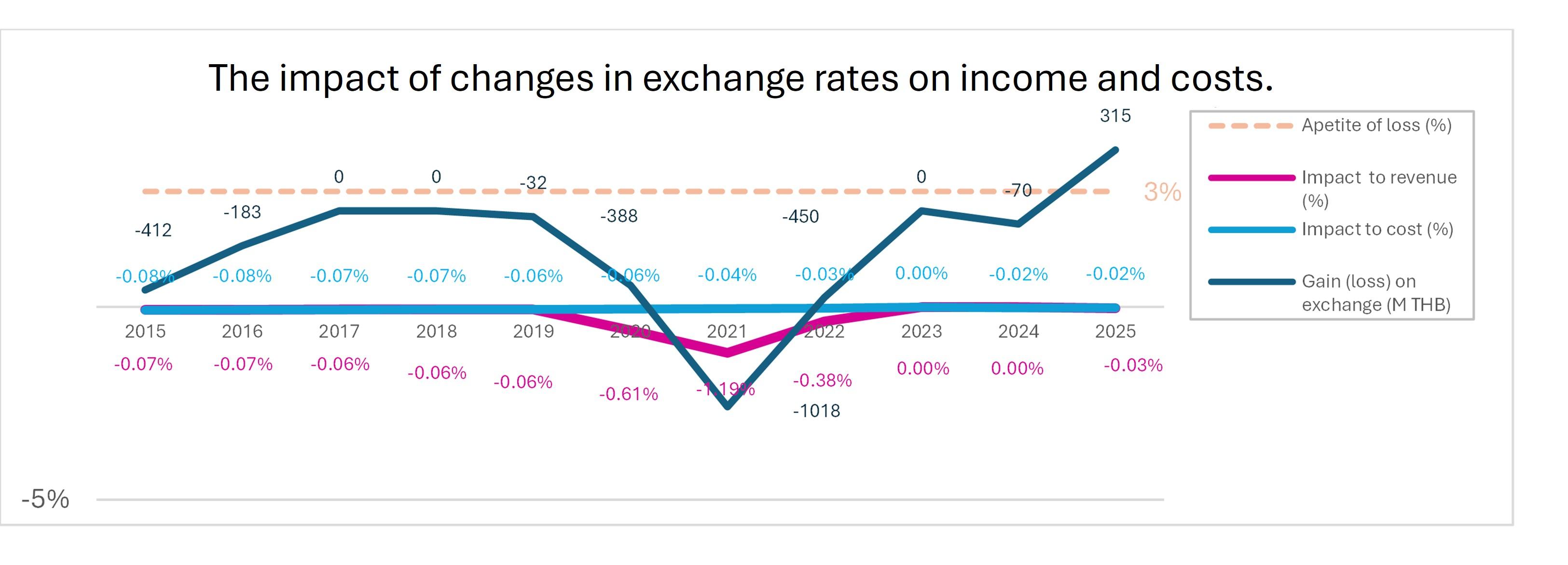
| Loss on Exchange rate | As a multinational organization, Delta Thailand is exposed to foreign exchange risk, primarily arising from its commercial transactions. Based on the latest risk assessment covering geopolitical and geo-economic tensions, stagflation, potential economic recession, central banks’ interest rate adjustments to curb inflation, and policy uncertainties stakeholder concerns have increased regarding the potential impact on the Group’s profitability. | Based on a review of financial performance over the past 10 years, the impact of foreign exchange fluctuations on costs has ranged between -0.02% and -0.08%, while the impact on revenue has ranged from 0.0% to -1.19%. Compared with the Company’s established risk control targets, these results indicate that foreign exchange risk has been effectively managed.
| The Company aims to limit the impact of foreign exchange fluctuations on key financial performance to no more than 10%, with an acceptable deviation threshold of 1%. To mitigate potential losses, the Company employs a range of financial instruments and risk management measures, including natural hedging through commercial contracts, forward exchange contracts, and netting arrangements for receivables and payables. | 764 · Description: Fluctuation in exchange rates, interest rates, or the inflation rate · Info category: FINANCIAL_RISK |
| Financial risks arising from operations undertaken to achieve net-zero carbon targets |
|
|
| 1717 · Description: ESG risk · Info category: STRATEGIC_RISK |
| Liquidity and profitability risks arising from investments in human capital development |
|
| 1. Talent Acquisition and Retention Strategy
| 767 · Other name: Decline in Liquidity and Profitability due to Human Capital Investment · Description: Other · Info category: FINANCIAL_RISK |
| Risk arising from the accelerated expansion of manufacturing facilities and procurement of machinery to support rapid product and technology transfers |
|
However, the Company has assessed that: The impact on liquidity is very low |
| 1724 · Description: Liquidity risk · Info category: FINANCIAL_RISK |
| Risk of increased tax costs arising from new tax measures | Delta benefits from tax incentives granted under the investment promotion scheme of the Thailand Board of Investment (BOI), which is a key factor supporting the Company’s competitiveness and operating performance. However, stakeholders may have concerns regarding changes in international economic policies and regulations, such as U.S. import tariff measures, as well as global tax reforms under the Global Minimum Tax (Pillar Two) framework developed by the Organisation for Economic Co-operation and Development (OECD). | Changes in such economic policies and regulations may reduce the advantages of the tax incentives received by the Company or increase its tax cost burden in the future. | The Company closely monitors developments in relevant regulations and continuously assesses their potential impacts on cost structure, cash flow, and liquidity to ensure effective risk management and the maintenance of financial stability. To address the implications of such tax measures, the Company has implemented the following key actions:
As a result of these measures, the Company achieved record-high net profit in 2025, supported by improved profit margins.
| 756 · Description: Change in laws and regulations · Info category: COMPLIANCE_RISK |
| Risk of revenue decline in target business segments | Domestic economic policies in major economies that influence the global economy have drawn stakeholder attention to the growth of the electric vehicle (EV) sector. This may impact our strategic target of achieving 50% green revenue from products and solutions that support energy transition and climate adaptation by 2030. There is a possibility that increased investment in the oil and gas industry in the United States could lead to resource stockpiling for domestic growth, which may disrupt the balance of global supply chains. | China’s “Made in China 2025” policy, which aims to strengthen the electric vehicle (EV) industry through various support measures such as subsidies, tax incentives, procurement policies, and infrastructure investments, is likely to propel China to become a leading global producer and exporter of EVs. However, international trade policies continue to impact related industries. Since 2016, exports of automotive parts and vehicles from China have been continuously affected by tariff measures, with increasing intensity driven by U.S. policies imposing import tariffs of up to 100% on automotive and electronic components from China. Such trade retaliations have had widespread impacts on the technology sector and global supply chains. | To address stakeholder concerns while appropriately reflecting the proportion of green revenue, the Company has enhanced its revenue disclosure by business segment since 2024 to better highlight the growth of its automotive business, which was previously included under the infrastructure segment. In addition, the Company has implemented a range of strategic initiatives to sustain long-term and resilient growth, as outlined below: Supply Chain Resilience Enhancement Market Expansion and Customer Base Diversification Innovation and Product Differentiation Acceleration Strategic Partnerships Strengthening Policy Advocacy and Regulatory Engagement According to the audited financial statements, revenue from the EV business accounted for 17% of total revenue (2024: 27%). The decline was primarily due to geopolitical tensions, global economic slowdown, and the increasing frequency of extreme weather events. Nevertheless, the Company’s green revenue derived from products and solutions that support energy transition, climate adaptation, and digital transformation remained strong, accounting for 72% of total revenue (2024: 75%). | 733 · Description: Business operations of partners in the supply chain · Info category: STRATEGIC_RISK |
| Risk of failure to comply with increasingly stringent laws and regulations | The reduction in U.S. funding for climate change mitigation may weaken global climate policy momentum. It also increases pressure on businesses to comply with more stringent international trade regulations, such as the European Union’s Carbon Border Adjustment Mechanism (CBAM). | This decline in climate-related investment may heighten risks of non-compliance with ESG standards, disrupt supply chains, reduce investor confidence, and lead to the emergence of new trade barriers. These factors could place U.S. exports at a disadvantage in markets with strict environmental requirements. In addition, rising geopolitical tensions among major powers may drive greater global reliance on the European Union in advancing net-zero greenhouse gas emission targets. | To mitigate risks arising from increasingly stringent global climate-related regulations, Delta has implemented a range of proactive measures as follows: Strengthening Regulatory Compliance and Sustainability Reporting Enhancing Supply Chain Readiness Diversifying Markets and Supplier Base Investing in Low-Carbon Solutions and Circular Economy Monitoring and Engaging in Policy and Regulatory Developments Enhancing Digital Compliance Systems In 2025, the Company did not incur any fines related to non-compliance with applicable laws and regulations. | 756 · Description: Change in laws and regulations · Info category: COMPLIANCE_RISK |
| Risk of reduced production efficiency or delays due to technology transfer |
|
|
| 732 · Description: Changes in technologies · Info category: STRATEGIC_RISK |
| Risk of unfair competition in the supply chain and impacts from mining activities | Heightened tensions between the United States and China, together with global efforts to strengthen infrastructure in response to climate change, have intensified competition for critical mineral resources. This trend may lead to the erosion or neglect of environmental and social responsibility standards. Rising demand for key resources, coupled with accelerated adoption of technologies to achieve net-zero emissions, may drive some organizations to source minerals from regions with less stringent regulations, in order to reduce costs through unfair labor practices and environmentally harmful operations. Such practices can result in biodiversity loss, increased corruption, and greater vulnerability within supply chains, as profit considerations are prioritized over sustainability amid growing global infrastructure demand. | Since 2024, China has strengthened its control over rare earth elements as part of its strategic national security agenda, particularly through export controls on extraction and separation technologies, as well as the expansion of controlled mineral lists. Key measures have been implemented in three phases:
In addition, China has implemented production quotas for rare earth oxides to control output levels and manage domestic resources effectively. These control measures may contribute to unfair competition within the supply chain and heighten risks related to climate change, environmental degradation, corruption, and human rights. Expansion of mining activities into new areas may lead to ecosystem disruption, pollution, and environmental deterioration. At the same time, pressure to meet market demand may incentivize regulatory avoidance, while corruption can facilitate illegal mining and weak enforcement. Furthermore, human rights violations such as unfair labor practices and unsafe working conditions may adversely affect workers and local communities. These risks underscore the importance of adopting sustainable and ethical business practices to safeguard the environment and uphold human rights in long term. | Strengthening Due Diligence and Transparency Strict Anti-Corruption Policy Enforcement Capacity Building and Stakeholder Engagement Promoting Circular Economy in the Supply Chain Supplier Engagement on Regulatory Compliance Delta maintains a zero-tolerance policy toward corruption and human rights violations within its supply chain. Currently, 100% of smelters associated with 3TG minerals, cobalt, and mica in Delta’s supply chain have completed and disclosed information through the EMRT. | 736 · Description: Damage to company image and reputation · Info category: STRATEGIC_RISK · 750 · Description: Climate change and disasters · Info category: OPERATIONAL_RISK · 751 · Description: Impact on the environment · Info category: OPERATIONAL_RISK · 753 · Description: Impact on human rights · Info category: OPERATIONAL_RISK · 754 · Description: Corruption · Info category: OPERATIONAL_RISK |
| Risk of misinformation and disinformation arising from artificial intelligence | Geopolitical tensions across multiple regions highlight the growing role of information warfare and the application of artificial intelligence in security and defense systems as key mechanisms for gaining strategic advantage. This has increased the risk of AI-driven misinformation and disinformation for Delta, particularly in areas related to green revenue growth, such as electric vehicle control systems, data center infrastructure, and automation solutions. | The spread of false information may adversely affect the Company’s reputation and corporate image, leading to a decline in consumer confidence and potential disruptions to critical supply chains. As Delta remains committed to advancing sustainable technologies, maintaining credibility and trust in the brand is essential to driving the success of its green initiatives. Accordingly, the Company places strong emphasis on strengthening robust cybersecurity systems alongside transparent communication practices to effectively mitigate risks associated with misinformation in the digital era. | To address risks associated with AI-driven misinformation and disinformation, Delta has implemented the following key measures: AI Governance and Policy Framework In addition, the Company’s headquarters in Taiwan is in the process of obtaining ISO/IEC 27701:2019 certification to ensure that all products supplied to the Industrial Automation business in Thailand comply with the Privacy Information Management System (PIMS). Digital Monitoring and Surveillance Proactive Communication and Awareness Transparent Stakeholder Communication Crisis Management Planning In 2025, the Company did not experience any material financial losses resulting from personal data breaches, data mismanagement, or misinformation incidents. | 758 · Description: Violations of laws and regulations · Info category: COMPLIANCE_RISK · 1723 · Description: Legal risk · Info category: COMPLIANCE_RISK · 736 · Description: Damage to company image and reputation · Info category: STRATEGIC_RISK |
| Risk of delays in achieving Science Based Targets initiative (SBTi) targets | Geopolitical tensions between the United States and China may delay Delta’s progress in achieving its Science-Based Targets (SBTi), due to constraints in accessing critical raw materials and technologies required for environmentally friendly products. Trade barriers, tariffs, and sanctions may increase costs and cause operational delays, potentially shifting. | The Company’s focus from long-term sustainability goals to short-term risk management. In addition, trade tensions may disrupt supply chains, limiting access to low-carbon materials and requiring the Company to adopt more flexible sourcing and operational strategies. Evolving regulations in key markets may also create compliance challenges, necessitating continuous monitoring and timely strategic adjustments. Rising costs from trade measures could impact investments in sustainability initiatives, making financial risk management increasingly important. Geopolitical uncertainty may further delay technology transfer and the adoption of new innovations, affecting the Company’s ability to advance critical technologies. At the same time, limited availability of renewable energy certificates (RECs) in certain regions may hinder progress toward carbon neutrality, requiring diversification of renewable energy sourcing strategies | To mitigate these risks, the Company has implemented the following measures:
As of December 31, 2025, the Company has achieved over 90% of its targets under the Science-Based Targets initiative (SBTi) and continues to actively close the remaining gaps. | 758 · Description: Violations of laws and regulations · Info category: COMPLIANCE_RISK · 736 · Description: Damage to company image and reputation · Info category: STRATEGIC_RISK · 1717 · Description: ESG risk · Info category: STRATEGIC_RISK |
| Risk related to employee health and safety | Health and safety are critical to Delta’s operations, given the large workforce at its manufacturing facilities, the use of advanced automation systems, and stringent labor standards. Maintaining a safe working environment not only enhances operational efficiency but also ensures compliance with international regulations, reflecting the Company’s commitment to employee well-being. Failure to uphold safety standards may result in increased costs, including compensation, penalties, and absenteeism, which could adversely affect overall operations. | Global tensions, rapid industrial transformation, and climate change have intensified operational risks, potentially disrupting production allocation, manufacturing transfers, and new orders driven by carbon neutrality goals. These factors place additional pressure on factory personnel, potentially leading to longer working hours, increased stress, and a decline in safety standards. Such inefficiencies may increase operating costs and negatively impact long-term profitability. Moreover, heightened workplace pressure may affect employee retention, as workers may seek more stable and safer working environments. In addition, geological disaster events in Thailand in 2025, along with pollution issues in various countries, have increased health and safety risks for employees and surrounding communities. Climate change also contributes to the spread of pests and both communicable and non-communicable diseases, necessitating stricter health measures. At the same time, material shortages and changes in production processes require more rigorous safety controls, particularly in handling new operations and chemical exposure. Comprehensive risk management is therefore essential to ensure safe operations, minimize environmental and health impacts, and support long-term talent retention. | Strengthening health and safety measures : Climate resilience planning : Workforce management and retention : Risk assessment across operations and supply chain : Sustainable operations and pollution reduction : Emergency preparedness and contingency planning : Continuous monitoring and reporting : | 749 · Description: Safety, occupational health, and working environment · Info category: OPERATIONAL_RISK |